Chat Game: Truth or Lie
- 4.4
- Rating
- 1.00M
- Installs
- Free
- Price

 Analysis by App-foxy
I went into Chat Game: Truth Or Lie expecting a quick party distraction, and that is exactly where it makes the most sense. This is a free casual game from UniPuzz Games built around playful chat-based prompts, where the fun comes from deciding whether something is true or made up and from seeing how confidently people can bluff. It is easy to understand, quick to start, and better suited to a relaxed group moment than to anyone looking for a deep, long-form game.
The important question is not whether it can replace every other casual game. It cannot. The better question is whether you want a lightweight social activity that can create conversation without requiring much preparation. In my experience, that is its strongest use. The game has a 4.4 average from around 5.6 thousand ratings, has passed one million installs, and is available for free, with optional purchases priced at $2.99 per item. Those details make it approachable, but they do not remove the need to consider how you actually plan to play.
What to consider before choosing it
I’d consider whether I want a quick prompt for a group or a game that can carry a session on its own. In my experience, that distinction matters more than the low-friction start: the format works best when players are happy to supply some of the fun through their reactions and conversation. That makes it worth looking next at how its appeal holds up beyond the first few rounds.
You May Also Like

 Blood Strike: 2.5 Anniversary
Blood Strike’s Loadouts Turn Every Drop Into a Tactical Gamble
A close look at Blood Strike’s custom loadouts: how fast access to signature weapons reshapes its battle royale rhythm, rewards preparation, and narrows the gap between fights.

 Pandora - Music & Podcasts
Pandora’s Music Is Easy to Start, but Harder to Recover
Pandora’s strength is its low-effort path from a seed to a station. Its weak spot is how much confidence it asks you to place in connection, setup, and quiet recovery.

 8 Ball Pool
 Is Built on Rivalries, Rematches, and Routine
A close look at the rivalries, rematches, shared routines, and unanswered safety questions that turn a quick pool match into a persistent mobile community.

 Samsung Music
’s Quiet Strength Is Playing What You Already Own
Its reach comes less from spectacle than from dependable access to a personal library. That simplicity is both the app’s strongest retention engine and its ceiling.

 AccuWeather: Weather Radar
AccuWeather Review: A Quick, Clear Forecast for Everyday Decisions
For everyday plans, the best forecast is the one you can understand quickly. AccuWeather makes rain timing, radar, and local conditions easy to act on, with a few trade-offs.

 Hill Climb Racing
Why Hill Climb Racing Still Turns Crashes Into One More Run
A tiny car, a bumpy hill and one more upgrade: Hill Climb Racing keeps resurfacing because its simple chaos makes every near-miss feel personal.
More From Our News Desk



The right kind of casual game for short social moments
My first decision criterion is the shape of the session. Chat Game: Truth Or Lie works best when I want something that can begin almost immediately and keep a conversation moving. It does not ask me to learn a complicated rule set or build a character before the interesting part starts. That makes it a natural choice for a break, a small gathering, or a moment when everyone wants to do something together but nobody wants to organize a full board game.
The chat format also changes the mood compared with a standard puzzle or arcade title. Instead of focusing only on personal performance, I am paying attention to wording, confidence, timing, and the reactions of other people. A statement that looks obvious on its own can become more amusing when someone presents it convincingly. The game therefore depends partly on the people using it. With a quiet or reluctant group, it may feel flatter than a solo game with a strong progression system.
I would also decide whether I want a game that encourages conversation or one that protects me from conversation. If I am looking for a private activity during a commute, a conventional word puzzle may be a better fit because its entertainment does not depend on anyone else responding. If I am sitting with friends and want a simple prompt for jokes and guesses, this title has a clearer advantage.
How much replay value do you need?
The next question is replay value. A game based on truth-and-lie exchanges can remain enjoyable when the people playing bring different personalities and stories to it. The same basic format can feel fresh when one person is an obvious storyteller and another is difficult to read. However, the format is not automatically endless. If I play repeatedly with the same group in the same way, the surprise can fade, especially if we rush through prompts instead of adding our own reactions.
That is why I treat it as a repeatable social tool rather than a game I must grind every day. It is useful to leave some space between sessions. I also get more from it when I turn each round into a conversation starter instead of treating the answer as the entire experience. Asking why someone chose a statement, or what made a lie believable, gives the session a little more life without changing the basic rules.
Who will appreciate the simple presentation?
The Everyone content rating makes the game broadly accessible, and its casual identity is clear. I can imagine it working for families, friends, and players who do not normally spend much time with mobile games. Still, accessible does not mean universally suitable. Younger players may need an adult to guide the social side of the activity, particularly if a prompt leads into personal topics. Groups should agree on boundaries before turning a light game into a conversation about private experiences.
Players who enjoy collecting items, mastering difficult mechanics, or chasing a highly structured campaign should set different expectations. This is not the sort of title I would choose when I want a demanding challenge or a sense of long-term achievement. Its appeal is immediate interaction, not complexity.
Where this game wins over familiar alternatives
Against ordinary solo casual games, the biggest strength is its ability to create a shared moment. A match-three game, endless runner, or basic trivia app can be entertaining without another person in the room, but those formats usually keep the attention on the screen. Here, the screen is more of a prompt for human interaction. That difference matters when the real goal is to break an awkward silence or give a group something easy to talk about.
It also has a lower preparation burden than a physical truth-or-dare activity. Nobody needs to write cards, find a host, or explain a long list of instructions. I can open it, understand the premise, and let the exchange develop naturally. That convenience is a genuine advantage for spontaneous use.
The chat framing is especially helpful for people who find direct party games intimidating. A player does not have to perform a complicated action or react with perfect timing. The focus is on deciding what sounds believable and enjoying the discussion around that decision. In a mixed group, that can make participation easier for someone who would avoid a more competitive game.
Three practical ways to get more from it
My first useful tip is to use it as a warm-up rather than the entire evening’s entertainment. When friends arrive and conversation has not started yet, a few rounds can give everyone a low-pressure subject. Once people are talking, the game can be put aside without making the gathering feel unfinished. This is more effective than expecting it to carry a long session by itself.
My second tip is to separate playful deception from personal disclosure. The game’s premise invites statements, but not every group wants to discuss private matters. I get better results when everyone agrees that fictional, harmless, or everyday topics are welcome while sensitive subjects are optional. That small boundary keeps the tone comfortable and prevents the social element from becoming a source of pressure.
My third tip is to watch the group balance. If one person dominates every exchange, the game becomes a performance by a single player. I would encourage a simple rotation so that quieter participants get equal opportunities to make a statement and judge the others. This is not a technical feature; it is a practical way to make the format work better in real life.
Where another category may be the better choice
There are clear situations in which I would choose something else. For a solo player who wants a reliable daily habit, a traditional puzzle game is likely to offer a more consistent sense of personal progress. For a family seeking a structured activity away from phones, a physical card game may be preferable because it puts the social interaction in the room rather than behind a display.
Trivia games may also be better when the group wants knowledge-based competition. Chat Game: Truth Or Lie is about reading statements and enjoying the exchange, not proving who has memorized the most facts. Likewise, a voice or video party game may suit a large remote group more effectively if the main requirement is direct communication across different locations.
I would skip this title if I dislike bluffing, feel uncomfortable making statements in front of others, or expect every round to introduce a new mechanic. The format is intentionally narrow. That focus is what makes it easy to use, but it is also the reason it will not satisfy players who need variety, strategic depth, or a substantial solo mode.
Understanding the free model before installing
The game is free to download, which makes trying it low risk. Optional in-app purchases cost $2.99 per item, so I would approach the purchase screen with the same care I use in any free casual game. The key decision is whether an optional item improves the way my group actually plays or merely extends a short burst of curiosity. I would start with the free experience and only consider spending if I had already found a regular use for it.
This is also where the cost of switching matters. There is little financial friction in testing the game, but there can be a social cost if I introduce it to a group that prefers face-to-face activities without phones. Some people will enjoy the convenience; others may feel that opening an app interrupts the conversation. I would present it as a temporary prompt, not as the main event, so everyone can opt in without feeling committed.
On the technical side, the current version is 2.3 and it supports devices running Android 7.0 or later. That makes it suitable for a range of older Android phones, although the experience will still depend on the particular device and how comfortably people can read and interact with the chat presentation. I would check the phone’s available space and battery before a longer gathering, but I would not treat this as a demanding game that requires a recent flagship device.
A realistic everyday scenario
Imagine three friends waiting for food at a casual restaurant. Conversation has slowed, nobody wants to start a competitive game, and there is no room for cards on the table. One person opens the app and begins a round. Each statement becomes a small invitation to explain, challenge, or laugh. The game fills the waiting time without requiring the group to commit to a full session, and it can be closed as soon as the food arrives.
That scenario captures the product better than a promise of endless entertainment. It is a bridge between silence and conversation. I have found that this kind of tool is most valuable when it solves a small social problem quickly. It does not need to replace a favorite game to be worthwhile; it only needs to make an ordinary moment more engaging.
What the developer’s approach suggests in practice
UniPuzz Games has positioned this as a casual chat game rather than a large, feature-heavy entertainment product. That focus is visible in the way I evaluate it: I care more about how quickly a group can understand the premise than about advanced systems or elaborate progression. The title’s one-million-plus installs and strong average rating suggest that the basic idea has reached a substantial audience, but popularity alone does not guarantee that every group will enjoy the same style of play.
I would pay attention to the rhythm of the session. If the prompts are used mechanically, the experience can become repetitive. If players add personality, pause for reactions, and let the statements lead into harmless stories, the same framework becomes more effective. In other words, the game provides the structure, but the group supplies much of the entertainment.
My recommendation for different kinds of players
I recommend Chat Game: Truth Or Lie to someone who wants a free, easy-to-start social game for friends or family. It is particularly suitable for short gatherings, ice-breaking moments, and players who prefer conversation over complicated controls. The Everyone rating and straightforward premise also make it approachable for mixed-age groups, provided the people involved set sensible boundaries around personal topics.
I would recommend trying it before paying for any optional item. The free entry is enough to discover whether the chat format fits your group’s personality. If your friends enjoy bluffing and playful debate, the game can become a handy addition to your phone. If they prefer structured trivia, solo progress, or screen-free interaction, another category will serve them better.
My final view is positive but specific: this is best used as a social spark, not as a complete replacement for deeper casual games. It succeeds because it removes preparation and gives people an immediate reason to talk. Its limits are equally clear, since replay depends heavily on the group and the format may not satisfy players seeking complexity. For the right situation, though, I would keep it installed as an easy option for turning a quiet few minutes into a more entertaining exchange.
FAQs for Chat Game: Truth or Lie
01What is Chat Game: Truth or Lie?
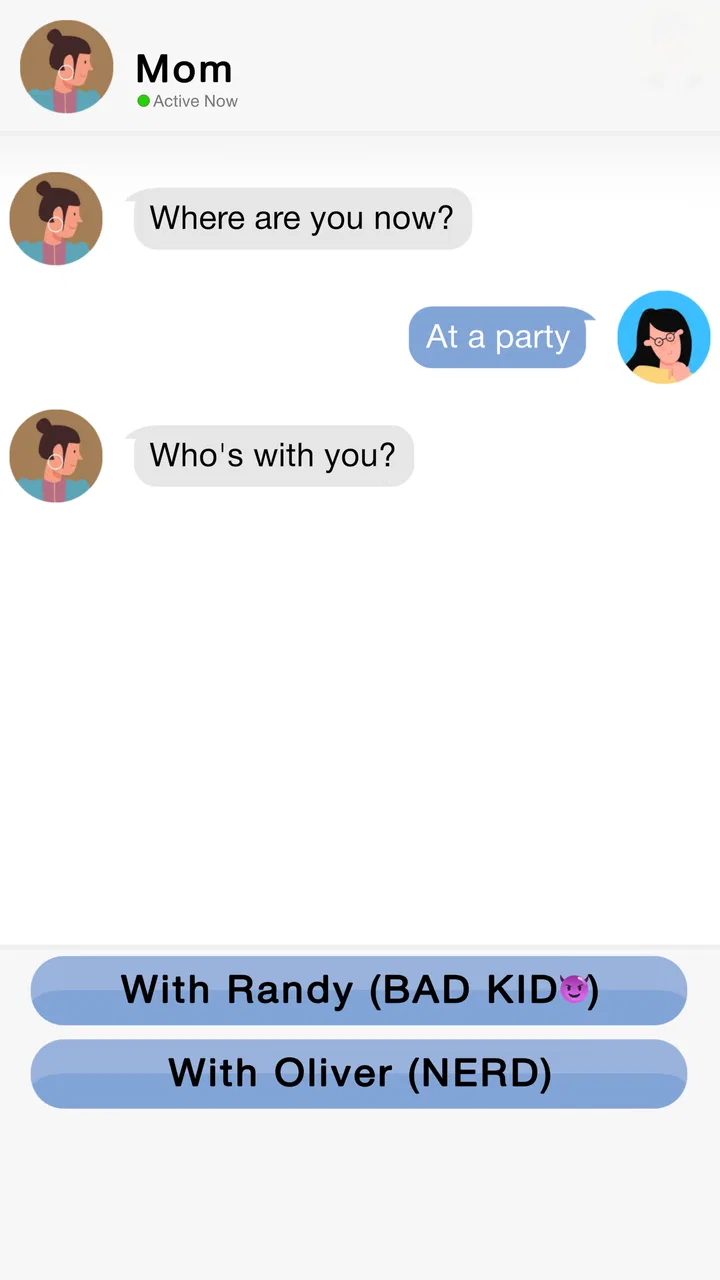
Chat Game: Truth or Lie is an interactive mobile app designed to test your ability to discern truth from deception. Players engage in conversations and must decide if the statements made by others are true or false. It's a fun and engaging way to challenge your instincts and improve your critical thinking skills.
02How does the gameplay work in Chat Game: Truth or Lie?
In Chat Game: Truth or Lie, players take turns making statements. Other players must then decide whether these statements are true or lies. Points are awarded based on accuracy. The game promotes social interaction and can be played with friends or matched with players online, providing a dynamic and lively experience.
03Is Chat Game: Truth or Lie suitable for all ages?
The game is generally suitable for teenagers and adults due to its reliance on social interaction and critical thinking. It may contain content or themes not appropriate for younger children. Parents should review the app’s content and settings to ensure it aligns with their family’s preferences.
04Are there in-app purchases or ads in Chat Game: Truth or Lie?
Yes, Chat Game: Truth or Lie includes optional in-app purchases that allow users to unlock additional features or content. The app also contains ads, which help support the developers. Users can disable ads by purchasing the ad-free version, enhancing the overall gameplay experience.
05Can I play Chat Game: Truth or Lie offline?
Chat Game: Truth or Lie primarily requires an internet connection to match players and update scores. Some features or practice modes might be available offline, but the full experience, including playing with friends or online opponents, necessitates being connected to the internet.
Pros
- Engaging gameplay keeps players entertained.
- Variety of questions adds replay value.
- Simple interface
- easy to navigate.
- Multiplayer mode enhances social interaction.
- Regular updates with new content.
Cons
- In-app purchases can be pricey.
- Ads may interrupt the game experience.
- Limited offline functionality.
- Requires stable internet connection.
- Some questions might repeat frequently.

Chat Game: Truth or Lie
Gallery